
Urgent snake sighting? Call Tyler now on 📞 0428 458 856
Welcome to Shire Snake Wranglers, your trusted experts for professional snake removal in Liverpool. Our team of certified snake catchers is dedicated to providing fast, safe, and humane snake removal and relocation services. Whether you've found a snake in your yard, home, or business, we're here to help 24/7. With years of experience and a commitment to safety, you can rely on us to handle your snake situation with care and expertise. Contact us now for immediate assistance and ensure your peace of mind.
We service Liverpool and surrounding South-West Sydney suburbs, including Moorebank, Casula, Prestons, Lurnea, Chipping Norton, Warwick Farm, Cabramatta, Green Valley, Heckenberg, Miller, Cecil Hills, Hoxton Park, Hinchinbrook, Edmondson Park and Austral. With the Georges River, local creeks, bushland corridors and ongoing development throughout the area, snake sightings are not uncommon, and we provide fast, licensed and professional snake removal across the Liverpool region.
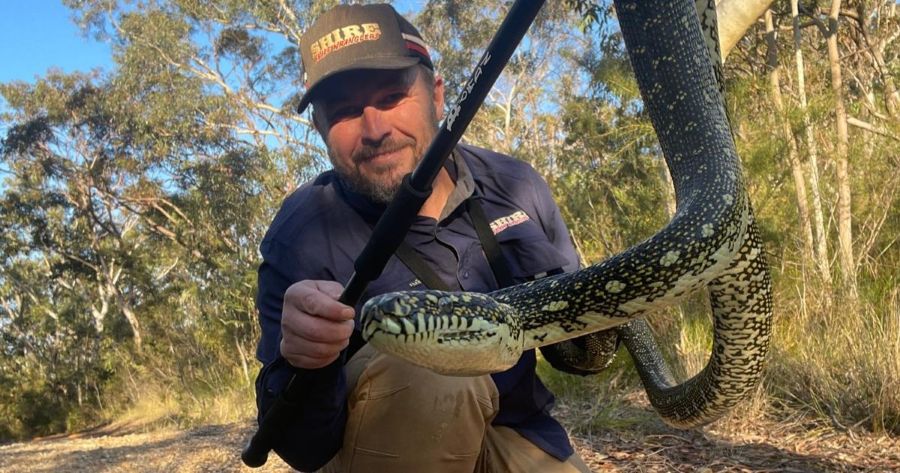
🐍 Why Are There So Many Snakes in Liverpool?
🏙️ A Complete Local Analysis
Liverpool is one of Sydney’s fastest-growing regions, combining dense urban development, long-established suburbs, and large pockets of remaining bushland 🌿. While many people think of Liverpool as a busy residential and commercial hub, it also sits alongside major waterways, nature reserves, and green corridors that support a surprisingly strong snake population.
From Red-Bellied Black Snakes moving along the Georges River 🐍 to Diamond Pythons appearing in older suburbs with large backyards and strong rat populations, snake encounters are increasingly common. To understand why, it’s important to look at Liverpool’s local geography, environment, and human impact.
🌳 Bushland Reserves and Natural Spaces
Despite rapid urban expansion, Liverpool still contains — and directly borders — significant areas of bushland 🏞️. The Georges River bushland corridor links suburbs such as Casula, Chipping Norton, Holsworthy, and Wattle Grove, creating an uninterrupted movement pathway for wildlife. This corridor supports Red-Bellied Black Snakes, Common Tree Snakes, and Golden-Crowned Snakes, particularly near creeklines and dense vegetation.
Chipping Norton Lakes and the surrounding reserve form an extensive wetland system 💧. Reed beds, lagoons, and grassy margins create ideal habitat for frogs, which in turn attract red-bellies and tree snakes. To the south, the Holsworthy Military Reserve remains one of Sydney’s largest intact bushland areas 🌲. Its proximity to Liverpool allows large populations of pythons and nocturnal snake species to spill into nearby suburbs.
Casula Parklands and Leacock Regional Park connect directly to the Georges River system, acting as stepping stones that allow snakes to move safely between bushland, waterways, and suburban areas.
💧 Waterways, Creeks, and Drainage Corridors
Liverpool’s snake activity is strongly shaped by water 💦. The Georges River, Cabramatta Creek, Harris Creek, Williams Creek, and the Chipping Norton lake system form a dense network of waterways. Added to this are countless stormwater drains and canals that unintentionally act as wildlife tunnels beneath roads and housing estates.
These corridors allow snakes to move unnoticed through the landscape. Red-Bellied Black Snakes dominate moist creeklines and wetlands, while Common Tree Snakes are frequently encountered near backyard ponds, drains, and garden beds 🌿. Diamond Pythons thrive in older suburbs with established rat populations, and Eastern Brown Snakes are more often found in drier open areas near industrial zones and new developments.
🏡 Suburban Yards and Human-Made Habitat
Many Liverpool suburbs feature backyards that unintentionally provide excellent snake habitat 🏠. Areas such as Casula, Moorebank, Wattle Grove, Lurnea, and Prestons commonly contain garden beds, retaining walls, ponds, sheds, storage areas, and large mature trees 🌳.
These features offer shelter and attract prey such as rats, frogs, skinks, and birds. As a result, snakes regularly pass through suburban properties, especially those close to bushland edges, creeklines, or green buffers. Retaining walls, roof cavities, and sheds become particularly attractive during extreme heat or heavy rain 🌧️.
🌡️ Climate and Seasonal Snake Behaviour
Liverpool’s inland location means hotter summer temperatures than coastal Sydney 🔥, which directly influences snake behaviour. In spring, snakes move widely while searching for mates, leading to a noticeable increase in sightings. Summer is the peak period, with snakes actively hunting and seeking cooler shelter in gardens, garages, and sometimes homes 🐍.
Autumn brings increased feeding as snakes prepare for winter, while winter sees them enter brumation in roof cavities, rock crevices, retaining walls, and other protected spaces ❄️. After heavy rain or flooding, snakes are often displaced from drains and creeks and appear suddenly in yards and streets.
📍 Liverpool Suburbs With Higher Snake Activity
Snake sightings occur across the entire Liverpool LGA, but some areas experience more regular encounters. Suburbs such as Casula and Glenfield see frequent activity due to bush corridors and river access. Moorebank and Wattle Grove, which border Holsworthy bushland, experience high numbers of pythons, red-bellies, and golden-crowned snakes 🌿.
Around Chipping Norton and Warwick Farm, wetland and lake systems support red-bellies, tree snakes, and occasional tiger snakes. Newer suburbs like Hoxton Park, Hinchinbrook, and Prestons often see Eastern Brown Snakes and whip snakes as development pushes into former bushland. Even around the Liverpool CBD, industrial areas attract rats, drawing in brown snakes and diamond pythons 🐀🐍.
🐍 Snake Species Commonly Found in Liverpool
The most frequently encountered species is the Red-Bellied Black Snake, a highly venomous but generally shy snake strongly associated with rivers and wetlands 💧. Common Tree Snakes are completely harmless and often surprise residents by appearing in bathrooms, garages, or backyards.
Diamond Pythons are non-venomous and play an important role in controlling rat numbers, particularly in older suburbs 🐍. Golden-Crowned Snakes are nocturnal and mildly venomous, hiding under leaf litter, sleepers, and retaining walls. Eastern Brown Snakes, which are highly venomous, are typically found in open ground, industrial zones, and newly developed areas.
Other species include the fast-moving Yellow-Faced Whip Snake, the Eastern Tiger Snake around wetlands, and the arboreal Brown Tree Snake, which often enters roofs and sheds while hunting geckos and birds 🐦.
🌿 Why Snakes Thrive in Liverpool
Snakes thrive in Liverpool because the region offers a rare mix of bushland, waterways, parks, and suburban development 🏙️🌳. Prey is abundant, shelter is readily available, and storms regularly push snakes into residential areas. Legal protection across NSW also ensures snake populations remain stable and healthy ⚖️.
♻️ The Ecological Role of Snakes in Liverpool
Snakes play an essential role in maintaining balance within Liverpool’s ecosystem 🌏. Pythons and brown snakes help control rat populations, red-bellies regulate frog numbers in wetlands, and overall snake presence indicates a healthy, functioning environment. Without snakes, pest numbers would rise sharply, leading to greater property damage and environmental stress.
⚠️ Safety Advice for Liverpool Residents
Living near bushland or waterways means learning to coexist safely with snakes 🐍. Keeping yards tidy, sealing gaps around buildings, managing water sources, wearing enclosed shoes outdoors, and staying calm during encounters all greatly reduce risk. Snakes should never be handled or harmed — this is both illegal and dangerous 🚫.
📞 Professional Snake Removal in Liverpool
Snake encounters in Liverpool are very common, especially near river corridors and reserve lines 🌿.
Shire Snake Wranglers – 24/7 Liverpool Snake Catchers
For fast, safe, and humane snake removal, call 0428 458 856 any time 📱
#Liverpool 🏙️ #SnakeRelocation 🐍 #SnakeCatcherLiverpool #ShireSnakeWranglers

Call us immediately! And if possible, try to maintain a visual of the snake - from a safe distance.

Safely attempt to contain the snake to an area of the house or property by closing doors, blocking gaps etc.

If possible, take a photo and/or record a video of the snake and text it to us (for identification purposes).

Most importantly, do not attempt to touch or catch the snake yourself! Please leave this to the professionals.
For urgent removal/callout, please click on the button below:
Alternatively, if you have a general question, or even some feedback, feel free to complete & submit the below form.
Yes, we are fully-licensed with the NSW National Parks & Wildlife Service (NPWS).
Licence #MWL000103684
Absolutely not! It is extremely important that you do not attempt to catch the snake yourself. Please leave this to the professionals, to avoid any risk of being bitten and/or seriously injured.
No. Please keep small children and pets away from wherever you saw the snake in your home/property, until it has been safely captured.
If you have been bitten by a venomous snake, it is crucial to take immediate action! Here are some recommendations:
1. Stay Calm: Panicking increases your heart rate, which can cause the venom to spread quicker.
2. Seek Medical Attention: Call emergency services or go to the nearest hospital as soon as possible. Do not attempt to drive yourself!
3. Keep Bite Area Immobilized: Immobilizing the bitten limb can slow down the spread of venom to other parts of the body.
4. Remove Constrictive Items: Snakebite swelling can progress rapidly, so remove any constrictive items, such as; rings, bracelets, or tight clothing near the bite site.
5. Do Not Apply a Tourniquet: Contrary to popular belief, applying a tourniquet, or restricting blood flow, is not recommended and can cause more harm than good.
6. Stay Hydrated: Drink plenty of water! Avoid alcohol, caffeine, or other substances that can increase heart rate and blood flow.
7. Observe and Describe the Snake: If possible, try to remember the look of the snake that bit you. This information can help healthcare professionals determine the appropriate antivenom for treatment.
Yes, we do. The amount varies and is dependent on the date and time. However, we guarantee we are the cheapest snake catchers in the Sutherland Shire!