
🚨 Urgent snake sighting? Call Tyler now on 📞 0428 458 856
Welcome to Shire Snake Wranglers, your trusted experts for professional snake removal across Greater Sydney. Our team of certified snake catchers is dedicated to providing fast, safe, and humane snake removal and relocation services. Whether you've found a snake in your yard, home, or business, we're here to help 24/7. With years of hands-on experience and a strong commitment to safety, you can rely on us to handle your snake situation with care and expertise. Contact us now for immediate assistance and complete peace of mind.
We service Greater Sydney and surrounding regions, including Western Sydney, South West Sydney, the Inner West, Northern Suburbs, Sutherland Shire, the Blue Mountains, and the Hawkesbury. With extensive bushland, river systems, creeks, wetlands, and urban green corridors throughout Greater Sydney, snake sightings are common — particularly during the warmer months. When a snake is found, we provide fast, licensed, and professional snake removal wherever it’s needed.
Why Are There So Many Snakes in Greater Sydney? A Complete Regional Analysis
Greater Sydney is one of Australia’s most biologically diverse metropolitan regions. Spanning coastal environments, river systems, national parks, bushland corridors, and rapidly expanding suburbs, it provides ideal conditions for native snake species to thrive.
While many people associate snakes with rural or remote areas, Greater Sydney’s mix of waterways, bushland reserves, and urban development makes snake encounters increasingly common — particularly from late spring through early autumn. As the city expands outward, human activity continues to overlap with long-established snake habitat.
To understand why snake sightings are so frequent across Greater Sydney, it’s important to look at the region’s geography, climate, and environmental pressures.
Geographical and Environmental Drivers of Snake Activity in Greater Sydney
🌿 Extensive Bushland and National Parks
Greater Sydney is bordered and interwoven with some of NSW’s most significant protected bushland, including:
Royal National Park
Blue Mountains National Park
Garigal National Park
Lane Cove National Park
Georges River National Park
Western Sydney Parklands
These areas support large populations of snakes and act as source habitats, with surrounding suburbs forming natural extension zones where snakes forage and shelter.
💧 Rivers, Creeks, and Wetlands
Greater Sydney is built around major water systems that snakes rely on:
Hawkesbury–Nepean River
Georges River
Parramatta River
Cooks River
Duck River
South Creek
Prospect Creek
Numerous stormwater channels
These waterways act as wildlife corridors, allowing snakes to move long distances through urban areas unseen. Species such as Red-Bellied Black Snakes and Tiger Snakes are especially common near creeks, wetlands, and floodplains.
🏡 Urban Expansion and Habitat Overlap
As Sydney continues to grow, new housing estates, industrial parks, and infrastructure projects are frequently built next to or within former bushland. This results in:
Displacement of snakes into nearby homes and yards
Increased sightings during construction and land clearing
Snakes sheltering under houses, sheds, and retaining walls
Many residential properties now provide better shelter and food availability than surrounding bushland.
🌡 Climate and Seasonal Behaviour
Greater Sydney’s climate strongly influences snake movement:
Spring – Breeding season; snakes travel more and are highly visible
Summer – Peak activity; snakes seek shade and water, often entering yards and buildings
Autumn – Increased feeding before winter slowdown
Winter – Brumation in rock crevices, drains, roof spaces, and logs
Western Sydney areas typically experience higher temperatures, which further increases snake activity compared to coastal suburbs.
Common Snake Species Found Across Greater Sydney
Across the Greater Sydney region, the most commonly relocated snake species include:
🐍 Red-Bellied Black Snake – Venomous; strongly associated with rivers, creeks, wetlands, and dams
🐍 Eastern Brown Snake – Extremely venomous; prefers open grassland, industrial areas, and bush edges
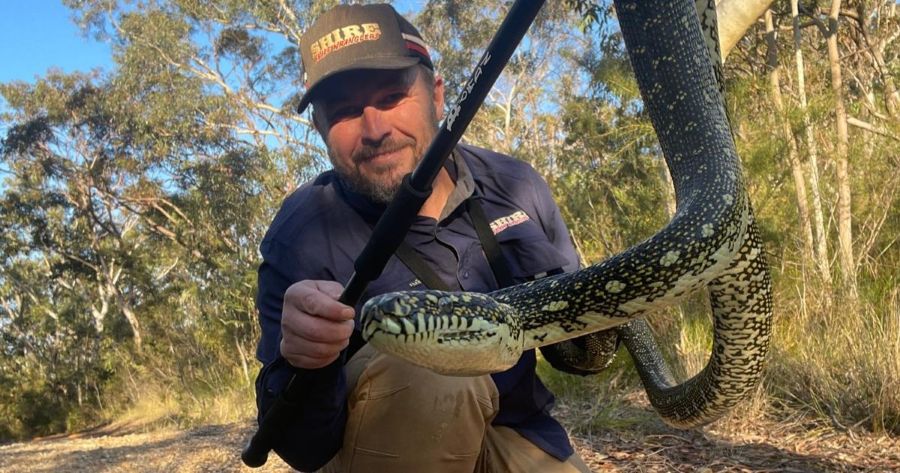
🐍 Diamond Python – Non-venomous constrictor; commonly found in roofs, sheds, trees, and backyards
🐍 Common Tree Snake – Non-venomous, fast-moving, and often mistaken for dangerous species
🐍 Golden-Crowned Snake – Shy and nocturnal; commonly hidden under mulch and leaf litter
🐍 Yellow-Faced Whip Snake – Mildly venomous; often seen basking in sunny gardens
🐍 Tiger Snake – Found near wetlands and waterways; less common but dangerous
🐍 Brown Tree Snake – Arboreal and mildly venomous; known to enter roofs and sheds
Why Snakes Are Thriving in Greater Sydney
1️⃣ Connected Green Corridors – Bushland, parks, and waterways allow snakes to move freely
2️⃣ Abundant Prey – Rats, mice, frogs, skinks, and birds thrive in urban environments
3️⃣ Human-Created Shelter – Timber piles, sheds, retaining walls, and under-house voids
4️⃣ Flooding and Heavy Rain Events – Force snakes out of drains and creeks
5️⃣ Legal Protection – All native snakes are protected under NSW law, supporting stable populations
The Ecological Role of Snakes in Greater Sydney
Snakes play a vital role in maintaining environmental balance:
Natural Rodent Control – Reduces rat and mouse populations
Balanced Food Chains – Prevents overpopulation of frogs and lizards
Environmental Indicators – Healthy snake populations signal functioning ecosystems
Without snakes, Greater Sydney would face increased pest infestations and ecological instability.
Safety Advice for Greater Sydney Residents
✅ Keep lawns trimmed and gardens tidy
✅ Remove timber piles, rubbish, and construction debris
✅ Seal gaps under doors, garages, and sheds
✅ Manage ponds and standing water
✅ Supervise pets near bushland and waterways
✅ Wear closed shoes in long grass
✅ Never attempt to handle or kill a snake
If a snake is seen, remain calm, keep a safe distance, and contact a licensed snake catcher.
Professional Snake Removal Across Greater Sydney
Snake encounters are common across Greater Sydney and should always be handled by trained professionals.
📞 Shire Snake Wranglers – 24/7 Greater Sydney Snake Catchers
For fast, safe, and humane snake removal, call 0428 458 856 any time, day or night.

Call us immediately! And if possible, try to maintain a visual of the snake - from a safe distance.

Safely attempt to contain the snake to an area of the house or property by closing doors, blocking gaps etc.

If possible, take a photo and/or record a video of the snake and text it to us (for identification purposes).

Most importantly, do not attempt to touch or catch the snake yourself! Please leave this to the professionals.
For urgent removal/callout, please click on the button below:
Alternatively, if you have a general question, or even some feedback, feel free to complete & submit the below form.
Yes, we are fully-licensed with the NSW National Parks & Wildlife Service (NPWS).
Licence #MWL000103684
Absolutely not! It is extremely important that you do not attempt to catch the snake yourself. Please leave this to the professionals, to avoid any risk of being bitten and/or seriously injured.
No. Please keep small children and pets away from wherever you saw the snake in your home/property, until it has been safely captured.
If you have been bitten by a venomous snake, it is crucial to take immediate action! Here are some recommendations:
1. Stay Calm: Panicking increases your heart rate, which can cause the venom to spread quicker.
2. Seek Medical Attention: Call emergency services or go to the nearest hospital as soon as possible. Do not attempt to drive yourself!
3. Keep Bite Area Immobilized: Immobilizing the bitten limb can slow down the spread of venom to other parts of the body.
4. Remove Constrictive Items: Snakebite swelling can progress rapidly, so remove any constrictive items, such as; rings, bracelets, or tight clothing near the bite site.
5. Do Not Apply a Tourniquet: Contrary to popular belief, applying a tourniquet, or restricting blood flow, is not recommended and can cause more harm than good.
6. Stay Hydrated: Drink plenty of water! Avoid alcohol, caffeine, or other substances that can increase heart rate and blood flow.
7. Observe and Describe the Snake: If possible, try to remember the look of the snake that bit you. This information can help healthcare professionals determine the appropriate antivenom for treatment.
Yes, we do. The amount varies and is dependent on the date and time. However, we guarantee we are the cheapest snake catchers in the Sutherland Shire!